
GVG CANOLA OIL 20l
Canola oil is a plant-based source of concentrated dietary energy, making it a practical option for horse owners and livestock producers looking to increase the energy content of a ration without relying entirely on additional grain.
At Green Valley Grains, we offer 100% pure canola oil in a convenient 20L container, suitable for incorporating into properly balanced feeding programs for horses and livestock.
Whether you're feeding performance horses, managing breeding stock or looking for additional energy in livestock rations, canola oil can offer a simple and versatile nutritional solution.
How to Store Canola Oil
Correct storage helps protect the quality of canola oil and maintain its suitability for animal feeding.
For best results:
- Store in a cool, dry location away from direct sunlight.
- Keep the container securely closed when not in use.
- Avoid unnecessary exposure to heat, moisture and air.
- Use clean equipment when pouring or measuring oil.
Convenient 20L Packaging
Green Valley Grains 100% Pure Canola Oil is available in a practical 20L container.
Ideal for horse owners, equestrian properties, farms and feed manufacturers, this size offers a convenient solution for regular feeding requirements.
Whether you're adding a small amount to a horse's daily ration or incorporating canola oil into a professionally formulated feed mix, our 20L packaging makes storage and handling straightforward.
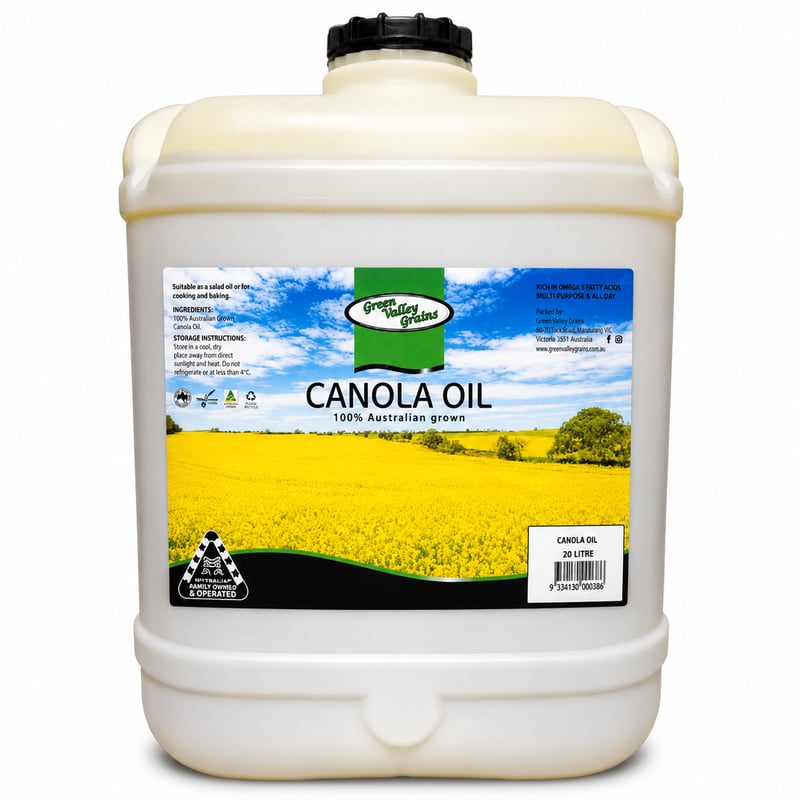
Product Ingredients

Supplementary Feeds
Pet birds can be excellent companion animals and are a popular addition to families. Provided they are properly cared for and are provided with an interesting and spacious environment that includes regular adequate exercise (free flight within a safe enclosed environment), birds can live a very healthy, vigorous, and fit life.
Signs of illness can be subtle in birds and birds often display a ‘preservation instinct’ which means that they can sometimes appear healthy despite being very ill. Veterinary advice should always be sought immediately if you suspect that your bird is unwell or if your bird shows any sign of being unwell.